The short, honest answer
Scripture speaks both languages. "He chose us in him before the foundation of the world" (Ephesians 1) and "Jacob I loved, Esau I hated" (Romans 9) sit in the same Bible as "whosoever believes" (John 3:16) and "God desires all people to be saved" (1 Timothy 2:4). Calvinist traditions resolve the tension toward sovereign election; Arminian and Orthodox traditions toward enabled-but-real human freedom; others insist Romans 9–11 isn't about individual destinies at all, but about Israel's story and God's faithfulness — a reading that changes what the whole argument is even about.
What the traditions actually say
The Preacher at our table preaches decision — the altar call assumes your yes matters — while acknowledging the Reformed stream inside evangelicalism reads election differently. The Historian asks what Paul was actually doing in Romans 9–11: a first-century argument about Israel, not a seminar on individual salvation. The First Reader agrees, and reads election the way the Hebrew Bible does — chosen for responsibility, not chosen instead of everyone else. The Old Soul brings the Eastern tradition's synergy: grace always first, freedom always real, mystery left standing. The Mystic mostly declines the debate's terms and asks what kind of God you're picturing when you ask.
Where the fault line runs
Underneath the proof-texts, the divide is about what God's sovereignty is like: meticulous control, or a love secure enough to make room for real refusal. The chart shows the spread; the readings show why each position thinks the other risks losing something precious.
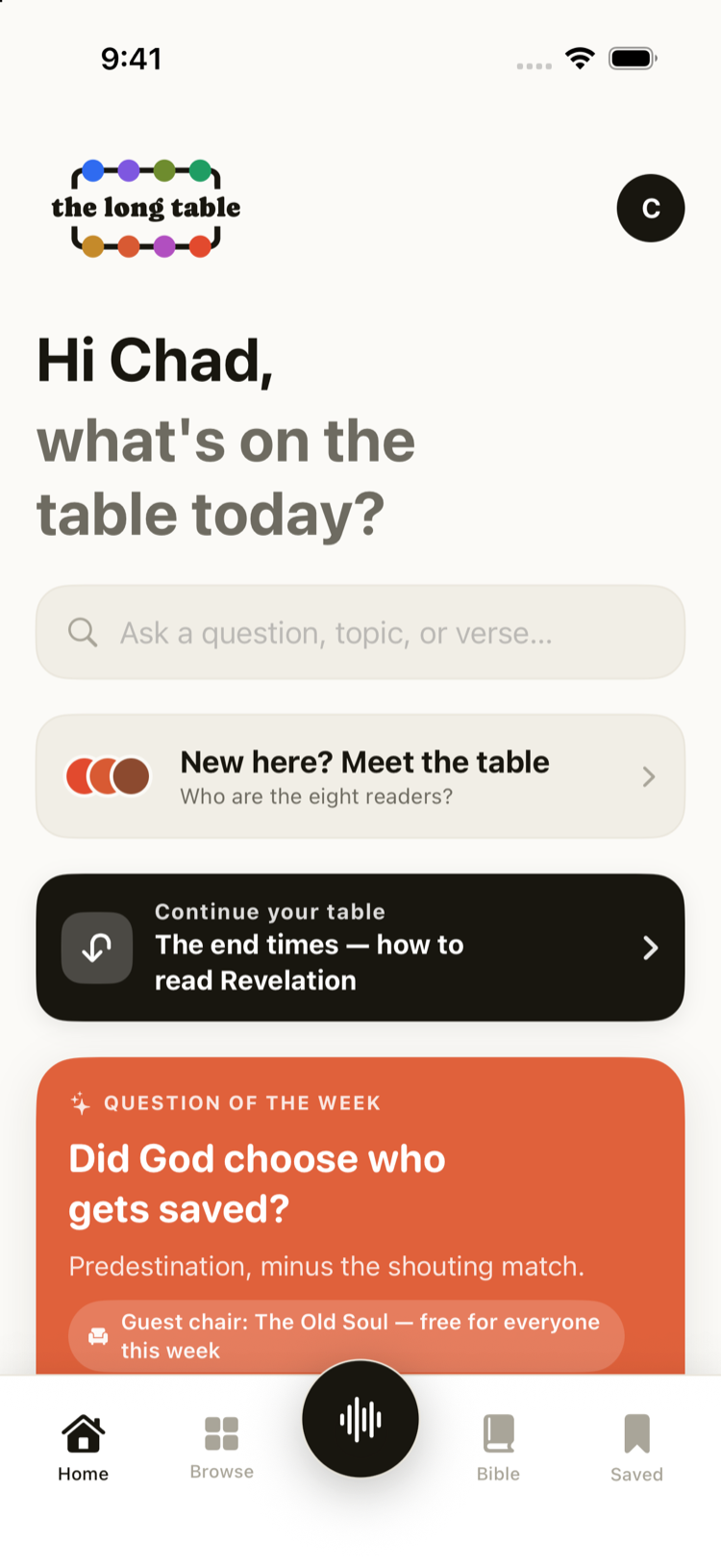
How to explore this at the table
- Ask it plainly — "Did God choose who gets saved?" — or tap Romans 9 in the built-in Bible and send the chapter itself to the table.
- Watch for the reading that reframes the question (Romans 9 as Israel's story). It usually sits apart on the chart — tap it.
- Read The Preacher and The Old Soul back to back for the cleanest sovereignty-vs-synergy contrast.
- Follow up: "Then what about Esau?" — the table answers follow-ups in the context of the conversation so far.
- Mark where you land, or mark 'still wrestling.' Jacob got a limp out of that; you're in good company.
Bring this question to the table.
Free on iPhone · 4 readers free · Plus seats all 8 with a 7-day free trial · No account, no verdict.